

The Modern Parenting Dilemma Nobody Warned You About
Let’s be honest – parenting looks completely different than it did 20 years ago. Smartphones and the internet aren’t just gadgets your kids use occasionally. For teenagers and preteens today, they’re the actual world where friendships are built, identities are shaped, and social lives play out in real time. That shift brings with it some serious parental concerns – from cyberbullying and predatory behavior to stumbling across content no child should ever see.
Here’s the thing that makes it even harder. As kids move through teenage development, becoming more secretive is completely normal. It’s not a red flag – it’s biology. They’re pulling away, building their own sense of self, and testing where the boundaries are. Every generation of teens has done exactly that. The difference now is that the space they’re retreating into is the internet, and that changes everything.
So where does that leave you as a parent? Caught between two things you genuinely care about – your child’s privacy and their safety. Neither one is wrong to want. The tension between them is real. And the numbers don’t make it any easier to sit on the fence: nearly 95% of teens carry a smartphone, yet most of them haven’t developed the digital literacy to recognize sophisticated online threats when they appear.
That brings us to the question every modern parent eventually faces. Should you monitor your child’s phone? Striking the right balance between supervision and trust isn’t simple, and anyone who tells you it is probably hasn’t tried it yet.
Understanding Teenage Psychology: Why Kids Seek Privacy
A lot of parents see their teenager pulling away and immediately think something is wrong. The door stays shut. Texts get hidden. Conversations get shorter. But here is the thing – that drive for privacy is almost never about defiance. Social studies across the field of human development have shown, repeatedly, that distance from parents is a completely normal stage of growing up. It happens to virtually every kid. During the teenage years, carving out space to build an independent identity is not just common – it is genuinely necessary for healthy development.
Think of adolescence as the season where kids start testing who they actually are, separate from their family. There is a real biological push toward autonomy happening here, not just attitude. That need for a “psychological boundary” is what helps teens develop self-reliance and figure out their own values. In past generations, this played out through diary entries and phone calls taken in another room. Today, it looks different. Encrypted messaging apps, disappearing posts, private accounts – teens now exercise that same age-old need for secrecy through tools that are far harder for parents to read. And that gap between healthy exploration and genuine digital risk? It has never been wider or more stressful to navigate.
So where does that leave you as a parent? Caught between respecting privacy rights and staying alert to very real safety concerns online. That is not an easy place to be. But understanding that secrecy is wired into human development during the teenage years changes how you approach the whole thing. Monitoring does not have to mean distrust. In fact, when teens understand that oversight exists to protect them from outside threats – not to control them – it lands very differently. Open communication paired with a calm “trust but verify” approach tends to work far better than surveillance alone, because it protects your teen’s developing independent identity while still keeping them safe.
Legal Rights: What the Law Says About Parental Monitoring
When it comes to digital surveillance, the legal terms around a minor’s right to privacy get misunderstood all the time. Here’s the reality in the United States: children do not hold constitutional rights to privacy from their own parents or legal guardians. Under current statutes, minors stay under parental care and supervision until they hit age 18 or become legally emancipated. That’s the baseline, and it rarely shifts.
American courts ruled on this consistently throughout history – parents carry both a fundamental right and a genuine legal obligation to oversee their children’s digital and physical lives. This comes straight from the principle that parents are responsible for their dependents’ well-being. Because of this, a child living at home has no expectation of privacy when it comes to online interactions, social media accounts, or smartphone use monitored by a legal guardian.
This authority really comes into sharp focus in child custody situations. Judges regularly see proactive parental monitoring as a sign of a “best interests of the child” mindset – not an invasive overreach. A few things worth knowing about the legal landscape:
- Ownership Rights: Parents typically buy the devices and cover the data plans, which means they hold legal control over both the hardware and the data moving through it.
- Protection vs. Privacy: Legal precedents consistently put child safety and harm prevention ahead of a minor’s preference for digital secrecy.
- COPPA Compliance: Federal laws like the Children’s Online Privacy Protection Act shield minors from corporate data harvesting – but they place zero restrictions on a parent’s access to their child’s information.
The bottom line is straightforward. Until a child reaches the age of majority, the legal rights of parents to monitor online activities stay front and center – because in a world that’s only getting more digital, safety and guidance aren’t optional.
Is Checking Your Child’s Phone Considered Abuse?
The short answer is no. Monitoring your child’s digital life is generally not considered child abuse under any legal standard. Parents have both the right and the responsibility to oversee what their minor children are doing online. In fact, parental supervision in the digital age is one of the most effective ways to keep kids out of legal trouble and out of harm’s way.
The internet is not a safe playground. Predatory adults actively use social media to target vulnerable kids, and without any oversight, children can end up sending or receiving sexual texts and explicit images – content that carries serious legal consequences in most places. A minor possessing or sharing that kind of material can face real, lasting repercussions. When you monitor those interactions, you are acting as a shield, not a threat.
That said, context does matter here. Checking a phone is not inherently abusive behavior, but it can start to look that way if it becomes part of a broader pattern of punishments that are disproportionate or psychologically damaging. If digital monitoring gets layered on top of physical threats or unjustified punishments that chip away at your child’s basic well-being, the whole picture shifts – and not in a good direction. The goal should always be protection, not control. Use monitoring as a safety tool focused on external threats like predatory adults, and pair it with honest, open conversations so your child actually understands why you are doing it.
The Impact of Divorce on Phone Monitoring Decisions
For divorced parents, getting on the same page about digital safety is honestly one of the hardest parts of post divorce life. Kids moving between two households run into different rules constantly – screen time limits, social media access, who’s allowed to see their messages. What one parent calls responsible monitoring, the other calls spying. And those clashing views? They fuel heated disagreements that make real co-parenting nearly impossible.
Conflicting parenting methods show up in the digital world all the time. One parent installs tracking software and monitors every message. The other believes in trust and stays completely hands-off. Here’s the problem – that gap doesn’t just create tension between two adults. It genuinely confuses kids. They start figuring out which house has looser rules, and suddenly they’re hiding apps or pushing boundaries the moment they walk through the more lenient door. One strict household simply can’t carry the weight of keeping a child safe online when the other isn’t aligned.
The real fix is baking digital boundaries directly into formal child custody decisions. A “Digital Use Policy” added to your parenting plan puts everything in writing – no guesswork, no arguments about who said what. When you and your co-parent just can’t reach a consensus, legal help or a mediation specialist can step in and define consistent boundaries that both households have to follow. Handling phone monitoring through proper custody arrangements keeps both parents legally on the same page. More than that, it puts the child’s well-being ahead of personal disputes and gives kids a stable, predictable digital environment – no matter which home they’re sleeping in that night.
Practical Guidelines for Parents: Balancing Safety and Trust
Good parental supervision in the digital age is a constant balancing act. You want to protect your kid, but you also don’t want to become the enemy – and that’s where trust building becomes just as important as any app or filter you install. The best monitoring strategies are built on transparency, not secrecy. Your child should know you’re watching out for them, not spying on them.
Start with family rules everyone actually agrees on. Sit down together and talk about screen time limits, which apps are okay, and what content is off-limits. When kids help shape the rules, they’re far more likely to follow them – and far more likely to come to you when something online makes them uncomfortable. That’s the whole point of open communication. Internet safety isn’t a lecture you give once and forget. It’s an ongoing conversation about real risks, including how a digital footprint can stick around long after a post gets deleted.
Here’s how to put all of this into practice:
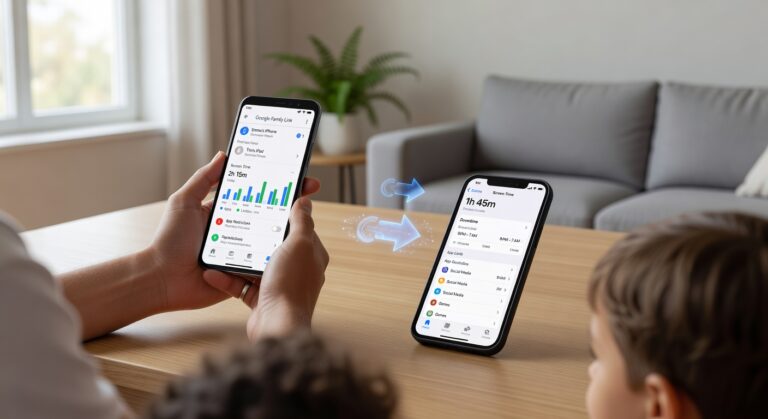
- Use technology as a tool, not a trap. Parental control apps can filter explicit content and set healthy screen time limits – but always tell your child they’re in place. Honesty here protects the trust you’re working to build.
- Teach real digital literacy. Help your kids spot phishing scams, recognize cyberbullying, and question misinformation. These skills give them confidence to handle tricky situations on their own.
- Adjust parental supervision as they grow. A teenager who has shown you they’re responsible deserves more digital privacy than a primary schooler. Gradually loosening the reins is a reward for good judgment – and it shows you’re paying attention.
- Turn monitoring data into teaching moments. When a site gets blocked, explain why. Use those conversations to deepen their digital literacy rather than just dropping the hammer.
The real goal of any monitoring strategies you put in place isn’t control – it’s raising a kid who can handle the internet safely on their own. Pair your technical safeguards with genuine open communication, and you end up with something powerful: a home where internet safety and trust building actually go hand in hand.
When to Seek Legal Advice and Intervention
Digital monitoring tools can do a lot of heavy lifting when it comes to keeping your child safe – but some situations genuinely call for an attorney. If you start spotting abusive patterns through your monitoring – emotional manipulation, neglect, physical threats – get legal help right away. Don’t sit on that evidence. Those digital records carry real weight when custody issues land in front of a judge, especially when a child’s safety is on the line.
Reach out to child custody lawyers if your co-parent keeps violating court-ordered boundaries, or if disagreements over digital privacy start snowballing into something bigger. The truth is, having a legal professional in your corner does two things at once – it keeps your monitoring actions compliant with privacy laws, and it puts your child’s well-being front and center where it belongs.
Here’s some good news: many family law firms offer a free consultation, so you can get a clear picture of where you stand before spending a single dollar. If you’re not sure what your next move looks like, these resources are a solid place to start:
- American Bar Association: Their directory connects you with licensed professionals who specialize in family law – searchable by state and practice area.
- Legal Services Corporation (LSC): If cost is a barrier, LSC provides legal help to low-income families dealing with civil legal matters, including custody.
- State-Specific Bar Associations: Most state bar websites run hotlines specifically for emergency protective orders and urgent family law questions.
Don’t wait for things to hit a breaking point. Consulting a legal expert early – before the situation spirals – gives you and your child the stable co-parenting foundation you both deserve.
Conclusion: Making Informed Parenting Choices
To summarize the whole picture here – balancing child safety and teen privacy is genuinely one of the harder parts of modern parental responsibility. There’s no perfect answer, and anyone who tells you otherwise is oversimplifying. That said, the key takeaways from everything we’ve covered point in a pretty clear direction: stay involved, stay informed, and keep the conversation open with your kids.
The truth is, teen privacy matters. Your teenager is building independence, and that process deserves some breathing room. At the same time, child safety in the digital world is a real concern – not a paranoid one. These two things aren’t mutually exclusive. You can respect your teen and still take your parental responsibility seriously. In fact, doing both together is exactly what builds trust over time.
So what are the real key takeaways? Know your tools. Know your child. And use that knowledge to make informed decisions that fit your family’s specific situation – not just a one-size-fits-all rulebook. Every teenager is different, every household is different, and your approach should reflect that.
At the end of the day, making informed decisions as a parent means staying curious, staying flexible, and never treating digital monitoring as a replacement for actual connection with your kid.